
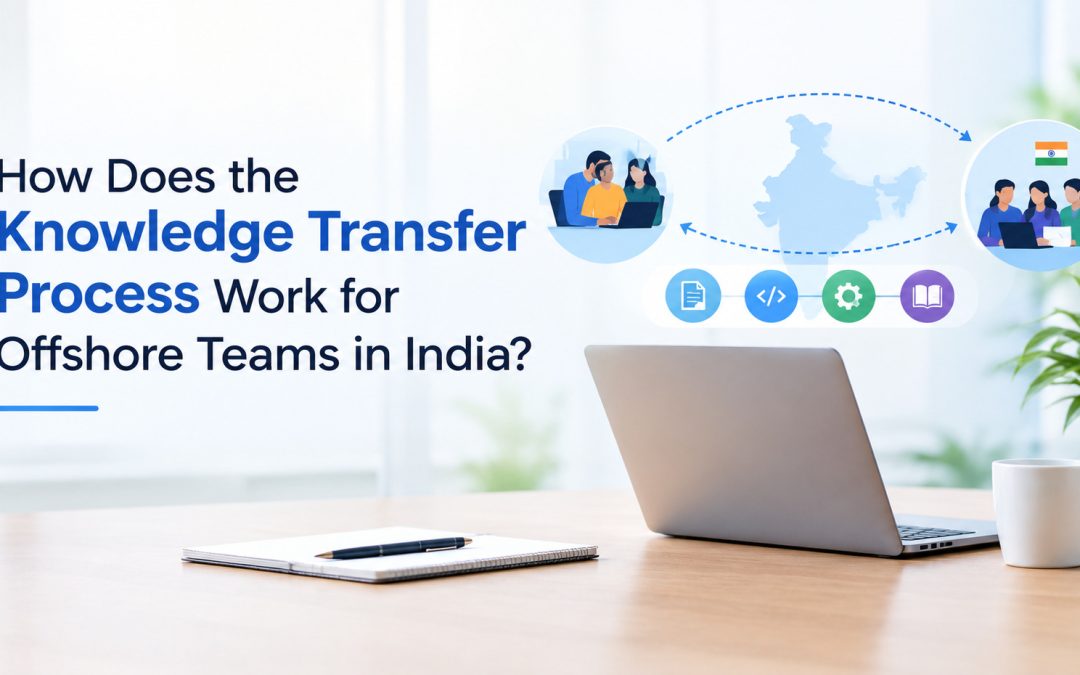
The knowledge transfer process is crucial for facilitating the transition of projects, technical tasks, and operational processes to the offshore teams. In case a company works together with offshore development teams from India, knowledge transfer becomes effective when the new team is aware of the goals of the project, its technical specifics, and processes.
Still, knowledge transfer entails not only the exchange of materials or introduction but also the presence of a training process, thorough documentation, good communication, and a handover plan. The lack of these factors will result in the occurrence of various problems with project delays, repetitions, and the dependence on the initial team.
In case a company cooperates with offshore development teams, knowledge transfer may be useful for improving cooperation and managing responsibilities independently.
What Is the Knowledge Transfer Process?
The knowledge transfer process refers to a systematic approach that allows for the transfer of technical knowledge, business requirements, project information, and procedures from one team to another.
Within an offshoring scenario, the knowledge transfer process involves the transfer of knowledge from the team already working on the project to the team tasked with maintaining, developing, or managing the project from a remote location.
It may involve such practices as technical walk-through, training sessions, code review, systems demonstration, and knowledge transfer documents. Knowledge transfer helps the new team understand how the project was put together, what factors were considered while making certain decisions, and how to deal with various issues that may arise.
Effective knowledge transfer process guarantees the availability of important information despite employee turnover or changes in responsibilities.
Why Is Knowledge Transfer Important for Offshore Teams?
However, offshore development teams work from multiple locations, different time zones, and sometimes from diverse organizational structures. Due to the lack of efficient knowledge transfer techniques, experienced developers may encounter difficulties with comprehension of the project architecture and its business logic.
There are many benefits of an effective knowledge transfer in offshore development:
- Improved continuity of the project: Knowledge sharing makes it possible to avoid disruptions caused by transferring responsibilities to a new team.
- Reduction of dependency: Properly documented information will not be available only to certain people.
- Increased productivity: Developers will be able to solve various problems much faster due to their understanding of the code base and technical decisions made.
- Improved communication: Information sharing and clear division of responsibilities will help to avoid misunderstandings between the client and offshore teams.
- Minimized risks of transition: The identification of missing information and unresolved problems will help to avoid problems during the transition phase.
Knowledge transfer is an integral part of managing offshore projects.
Also Read: How to Work With Offshore Teams: Challenges & Proven Strategies
How Does the Knowledge Transfer Process Work?
Effective knowledge transfer involves a number of steps aimed at preparing the offshore team for the responsibility of handling the project.
- Identify Project Scope and Goals
The first step is to define what information is needed to be transferred and what goals the receiving team needs to achieve. It would be helpful for companies to specify the scope of the project, technical requirements, responsibilities, deadlines, and desired results.
It is important to clearly define the goals in order to make sure that everything will be done before the project is considered successfully transferred.
- Identify Key Employees With Needed Knowledge
The second step is to identify employees who have relevant information on different sides of the project.
Everyone could describe his/her own piece of the system. Programmers could present the code-base, business analysts could describe functional requirements, and the operations staff could discuss deployment.
Recorded meetings, wherever allowed, would allow offshore staff to review necessary data whenever needed.
- Prepare Offshore Documentation
The offshore documentation is the textual record of the data necessary for the management and development of the project. This document must be accurate, well organized, available to those who are authorized and should be updated during the project.
Necessary offshore documentation may consist of system architecture, technical specification, coding standard, API data, database structure, testing processes, deployment instructions, etc.
Effective offshore team documentation should also contain explanations of significant technical choices and business rules.
Firms should appoint document owners and use version control for ensuring the accuracy of the information.
- Conduct Training and Technical Breakthroughs
In some cases, the documentation itself might not suffice as adequate context for complicated projects. This can be solved by showing the team how the system operates through breakthroughs and training.
The team should get a chance to practice this through supervision. Practice is a good way of discovering any shortcomings before the offshore team begins to operate on its own.
- Tools and Communications
The offshore team requires adequate access to tools that are relevant to their responsibilities. This includes access to source code management tools, project management tools, documentation tools, and test environments.
- Complete the Project Handover Process
The responsibilities are transferred from the current team to the offshore team. In the initial phase of transfer, both the teams should be clear about pending work items, milestones achieved, issues faced, dependencies, deadlines, and operational activities.
Phased transfer of responsibilities can simplify the handover process for the management. The offshore team can start with simpler work activities like bug fixing or documentation before becoming responsible for complicated activities.
- Verify Knowledge and Give Support
Verification of knowledge is the last activity that is needed to be performed by the business organizations. Apart from meeting participation, practical performance should also be considered for evaluation.
Common Challenges in Offshore Knowledge Transfer
Even with thorough planning, companies could face issues while performing offshore knowledge transfer.
- Lack of documentation
Lack of relevant details and out-of-date instructions could hamper the development process. Regular reviews and assignment of documentation responsibility could ensure relevance.
- Communication issues
Differences in time zone and poor communication skills could result in delays in decision-making. Summaries of discussions and agreed escalations could help.
- Individual dependency
If key details about the process are present only with a limited number of employees, then it is going to be tough to perform the transition without them. Documentation and training could help in transferring knowledge across the team.
- Inadequate training
Developers could be aware of the concepts but not able to perform tasks. Assignments under supervision could help assess their preparedness.
Best Practices for Offshore Development Companies in India
The clients that collaborate with the offshore development companies in India need to consider knowledge transfer as a continuous process.
Keep documentation up-to-date during the entire period of collaboration, not just when it becomes required to make a handover of the project. Maintain the correctness of technical data by using shared repositories, version control, and clear ownership of information.
Ensure the constant flow of communication and give opportunities for asking questions at once without any postponement. Define the responsibility for pending tasks, technical decisions, and other open issues.
It is also important to evaluate the efficiency of knowledge transfer based on some practical signs, including the amount of time to finish the first independent task, requests for clarifications, unresolved issues with handovers, and following the testing/deployment process.
Such approaches contribute to the development of knowledge sharing culture.
Conclusion
The process of knowledge transfer plays an important role in facilitating the successful transition of projects and collaboration with offshore teams in India. The offshore documentation process and technical training, as well as the process of project handover, contribute to understanding the roles and responsibilities of the receiving side and working autonomously.
Companies can minimize the risk of transition through effective communication, training, documentation, and support. This will not only enable offshore teams to gain confidence but also help to solve problems effectively.
FAQs
- What is the process of knowledge transfer in offshore development?
The knowledge transfer process comprises the exchange of technical information, business requirements, processes, and responsibilities with the offshore team through documentation, training, breakthroughs, and testing.
- Why is offshore documentation necessary?
The offshore documentation serves as a reliable source of technical details, system architecture, coding standards, and processes. It minimizes the reliance on employees and facilitates problem-solving without requiring outside help.
- How long does the offshore knowledge transfer take?
It depends on many factors, such as project complexity, documentation quality, experience of the team, and number of systems to work with.
- What must be included in the project handover process?
The project handover process must include project status, work to do, documentation, issues, permission access levels, testing, responsibilities, and escalation contacts. Proper assessment will help verify the preparedness of the receiving team.
- What criteria must businesses use when selecting offshore development companies in India?
Businesses must consider technical skills, communication, security, documentation, project management, and post-handover process when selecting offshore development companies in India.

 English
 German
 Dutch