
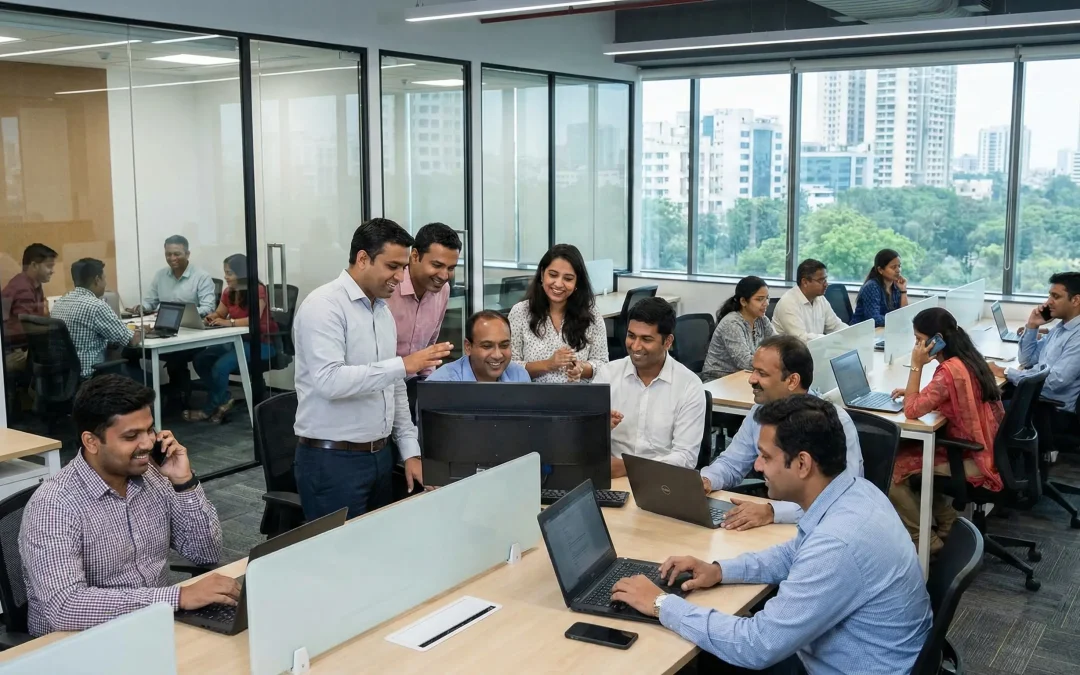
Expanding into a new country is never actually just about hiring new talent or setting up operations.
There are more things that go into it, like understanding how they work, communicate, make decisions, and define success. So we understand how, for a global startup like yours or businesses entering India, it can get difficult to figure out the work culture in India, but that’s what will take you ahead!
At Insource India, we work daily with founders, HR leaders, and operators from the US, UK, Europe, and other international markets.
We help them build and run teams in India, setting up a legal entity, and just as importantly, we help them understand Indian workplace culture, Indian work ethics, and the realities of business culture in India.
So in this guide, you will find all you need to know before bringing your business to India!
What Is Work Culture in India?
First things first, work culture in India is not so simple. It is a blend of tradition, economic growth, education systems, and global exposure.
So a startup in Bengaluru will operate very differently from a manufacturing plant in Pune, or a global enterprise office in Chennai.
Basically, the same rules cannot be applied everywhere.
That said, there are common patterns that show up across Indian workplace culture.
At its core, Indian work culture is:
- Relationship-driven
- Respectful of hierarchy and experience
- Strongly oriented around responsibility and accountability
So when talking about Indian work ethics are often shaped early through education systems that emphasize a lot on discipline, exams, and long-term outcomes.
This means there are many professionals who grow up associating work with stability, identity, and responsibility to family. Now, this doesn’t mean Indian teams lack ambition or creativity, but rather that they express it differently.
Here is one thing global leaders notice early:
People may hesitate to openly disagree, especially with senior leadership.
That hesitation is not a lack of ideas, but instead, it can be a sign of respect and welcoming your opinions before they throw in theirs.
And understanding this one point alone will help you improve your cross-border collaboration and communication dramatically!
Key Expectations in Indian Workplace Culture
Here is what you can expect in an Indian Workplace Culture:
1. Respect For Hierarchy
In Indian workplace culture, respect is shown through tone, structure, and acknowledgment. So it’s quite expected that people may not openly challenge your decisions, especially in group settings.
Now, this often confuses international managers who expect debate. And well, this is one of the most common cultural differences when working with India.
What we have seen work well is:
- Inviting feedback one-on-one
- Asking “What would you do differently?”
- Explicitly stating that disagreement is welcome
Once they can trust that their disagreements will be heard, Indian teams can be far more expressive than people expect!
2. Strong Sense Of Responsibility
A defining trait of Indian work ethics is personal accountability. Deadlines are taken seriously. Commitments are remembered. So, acknowledging these moments will help build trust faster than most team-building exercises.
3. Stability Matters More Than Hype
Unlike job-hopping cultures elsewhere, many professionals value long-term stability. This means trust in leadership, growth visibility, and job security can heavily impact the confidence of the team. And this is exactly where managing Indian employees asks for clarity, and not just compensation.
Common Practices Across Indian Workplaces
While we agree that expectations will define the mindset, daily practices, and your actions are what will make a change in experience.
Below are the norms that show up across industries, from SaaS to manufacturing, and you can opt as well:
1. Communication Styles
Communication in the Indian workplace culture can be polite and indirect, which can be difficult to manage if you are new to it.
You might hear people saying “yes,” but sometimes, it may mean “I understand” rather than “I agree.”
Clearly, this is one of the most misunderstood cultural differences when working with India
Hack: Ask follow-up questions. Replace “Can you do this?” with “What challenges do you think can arise?”
2. Working Hours and Availability
While official hours might be structured, flexibility is quite common and enjoyed here in India!
You will see how many employees will not hesitate to adjust schedules to meet deadlines or collaborate with the global teams.
However, you should assume that they won’t work for long hours every day, especially if there has not been prior communication about it.
Afterall, you want performance that lasts long term.
3. Festivals and Personal Life
Last but not least, respect the festivals. In India, people love festivals and cultural events, and some also have family obligations.
Once you acknowledge these festivals, important dates, personal matters, etc, you can actually help the employees trust you. In fact, many Indians stay for longer years in companies, when they respect important holidays!
Indian vs Global Workplace Norms:
| Area | Indian Workplace Culture | Western Workplace Culture |
|---|---|---|
| Communication | Polite, contextual | Direct, explicit |
| Hierarchy | Experience-driven | Flat structures |
| Feedback | Subtle, private | Open, frequent |
| Job Security | Highly valued | Flexible |
| Decision-making | Leadership-led | Collaborative |
Challenges & Misconceptions
Here is a thing: most challenges do not arise from the gaps in capability, but rather from misunderstanding.
Let’s talk about some misconceptions that can create challenges for you to understand your employees in India:
“Indian teams need constant supervision.”
Well, false! This myth often comes from unclear expectations.
But with proper onboarding and aligned KPIs, managing Indian employees can become seamless!
“Long hours mean more productivity.”
And you might even find people who would work overtime, but it’s important to remember that burnout is real.
So if you want a healthy work culture in India, make sure you focus on discipline rather than working more than anyone should.
“Everyone Works the Same Way”
That is incorrect as well, as India is diverse.
So, regional, educational, and industry-specific variations strongly influence Indian workplace culture.
Here is a key takeaway for you: You can try to adapt your leadership style, not the standards.
Business Culture in India: What Global Companies Must Know
The business culture in India is relationship-first. That’s why trust often comes before speed. Conversations matter.
Long-term intent matters. So, companies that treat India as a short-term cost-saving destination face a lot of struggle. While companies that treat it as a strategic growth market often succeed and make their name in the market.
At Insource India, we legally employ your India-based team while you retain full operational control.
We handle payroll, statutory compliance, taxation, benefits, and HR administration so you don’t have to navigate the complex regulations alone.
So if you are a company that is planning permanent operations, we also support entity setup, compliance, finance, accounting, and infrastructure.
Our goal is pretty simple here: reduce friction so you can focus on building real teams.
And now that you know how you can adapt to the Indian mindset and culture, you are prepared to step into the big market!
Conclusion
Understanding the work culture in India is not about memorizing rules. It’s about paying attention to how people work, communicate, and build trust.
When global companies respect Indian workplace culture, align with Indian work ethics, and adapt to business culture in India, they don’t just build teams but actually focus on a long-term plan!
In a diverse country like India, you get to have a hand on talent and scale.
And the record says that companies that succeed here are the ones that invest in understanding people, not just the processes.
Frequently Asked Questions
1. What is the working culture in India?
The working culture in India is built around responsibility, respect, and relationships. People usually take their roles seriously and feel personally accountable for their work.
2. Does India work 6 days a week?
It depends on the industry. Some traditional sectors and small businesses still follow a six-day workweek. However, most technology companies, startups, and organizations working with international clients operate on a standard five-day work week.
3. How to manage Indian employees as a foreign manager?
Managing Indian employees works best when expectations are clear and communication is consistent. People respond well to structure, context, and knowing exactly what success looks like.
4. What cultural differences should I know about when working with India?
One of the biggest differences is communication style. Conversations are often more indirect, and people may avoid open disagreement out of respect. Plus, hierarchy plays a role, too!
5. Are Indian work ethics good?
Yes, very much so. Indian work ethics are widely appreciated for their sense of responsibility, adaptability, and long-term commitment. And many professionals take pride in their work and value consistency and reliability.

 Dutch
Dutch  English
  German